











Healthcare is at a point where speed, data, security, and cost all collide—and legacy, on prem systems just weren’t built for this kind of pressure. This is especially true for core healthcare platforms like Epic. Moving to the cloud isn’t really a “nice to have” anymore; it’s becoming a practical necessity if health systems want to keep up with clinical demands, rising cyber risks, and financial constraints.
The Economics of Cloud Adoption
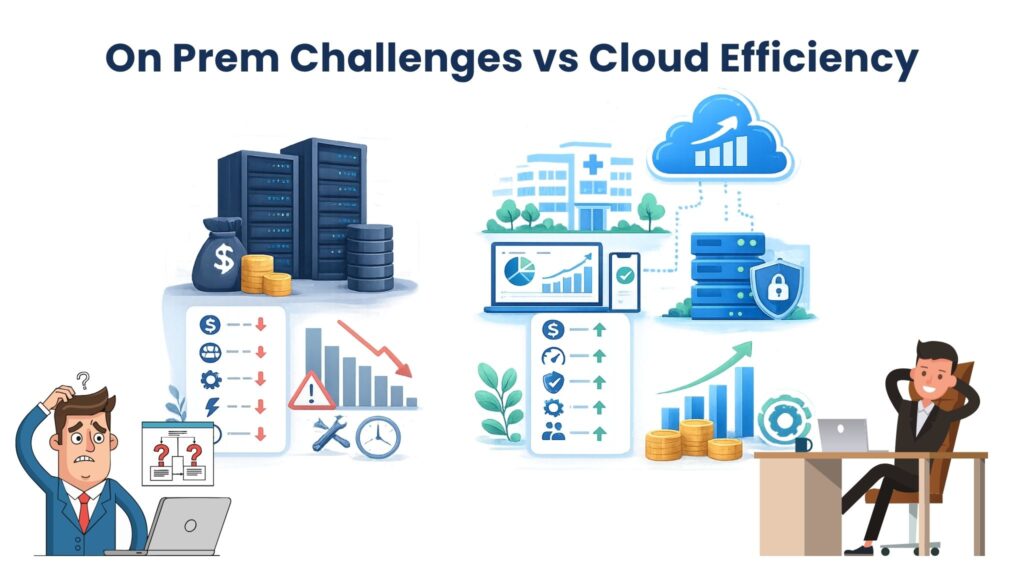
Starting with the economics, running on prem infrastructure is getting harder to justify. Hospitals still deal with large capital expenses every few years, along with staffing, energy, and maintenance. Scaling takes time. Cloud turns that into a more flexible operating model where systems can scale when needed and avoid constant hardware refresh cycles. Over time, many studies show on prem EHR environments can cost 20–40% more when you factor in downtime risk, staffing, and disaster recovery. So, this isn’t just about cheaper infrastructure, it’s about removing operational inefficiencies in healthcare systems.
Clinical Impact and System Resilience
Then there’s clinical impact. Downtime is not just an IT issue, it affects patient care directly. Epic outages can slow down medication administration, labs, radiology, and even ED throughput. That’s why resilience is now seen as a clinical priority. Cloud platforms bring built in redundancy, automated failover, and the ability to handle patient surges.
Security and Compliance in the Cloud
Security is another area where thinking has shifted. The idea that cloud is riskier is outdated. Healthcare breaches are increasing, and most of them come from issues common in on prem setups, like unpatched systems or weak access controls. Major cloud providers now offer strong alignment with HIPAA and NIST standards, along with encryption and automated monitoring by default. In reality, many hospital data centers simply can’t match that level of investment and automation.
The Maturity of Epic in the Cloud
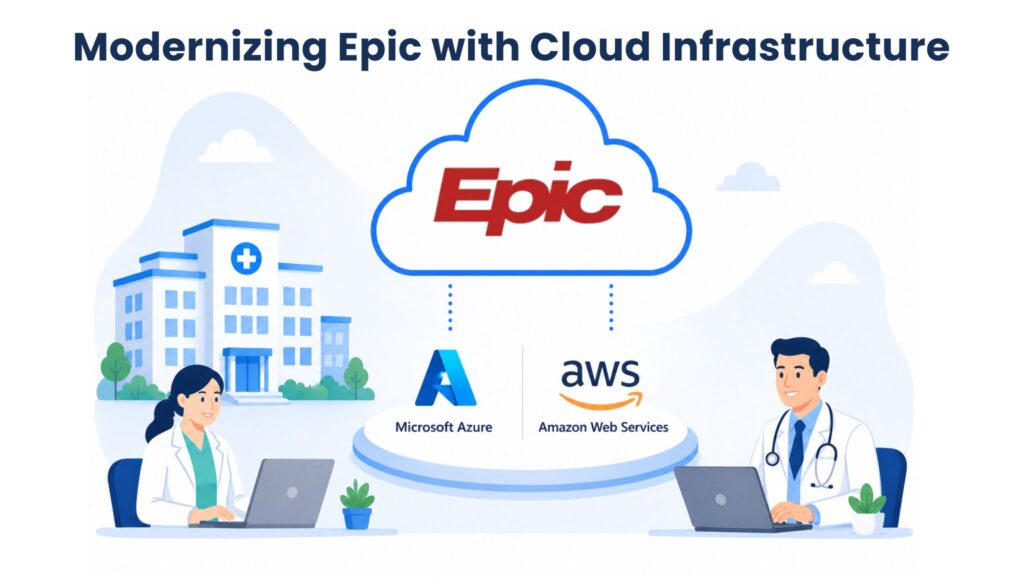
Epic in the cloud has also matured. There are now dozens of health systems successfully running Epic on platforms like Microsoft Azure and Amazon Web Services. Purpose built architectures, better tooling, and automation have made deployments faster and more reliable. What used to take weeks can now be done in hours. But the organizations that succeed treat this as more than just a lift and shift, they rethink their operating model.
Cloud as the Foundation for AI and Innovation
Finally, cloud is what unlocks the future, AI, real time analytics, population health insights. On prem environments struggle to support these at scale. With more than half of healthcare organizations already exploring generative AI, staying on legacy infrastructure limits what is possible.
Managing the Challenges of Migration
Of course, there are risks such as cost overlaps during migration, governance gaps, integration issues, but these are manageable with the right planning.
The Future of Healthcare Infrastructure
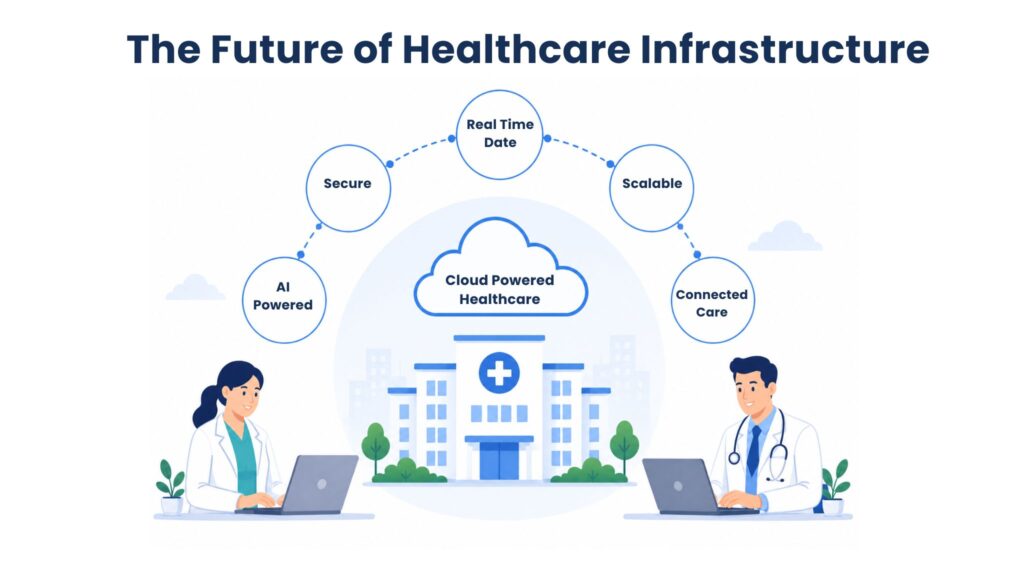
Cloud migration is no longer experimental. It’s becoming the foundation for resilience, security, financial sustainability, and innovation in healthcare. The real question is no longer whether healthcare organizations should embrace this shift, but how quickly they can modernize operations, improve efficiency, and build a foundation for future innovation.