







Healthcare interoperability isn’t a “nice-to-have” anymore. It’s a regulatory requirement, an operational necessity, and a long-term strategic priority. As healthcare organizations push toward seamless data exchange, FHIR (Fast Healthcare Interoperability Resources) has emerged as the backbone of modern health IT. But technology alone doesn’t guarantee success. Without the right knowledge and skill sets, even heavily funded FHIR initiatives can fall short.
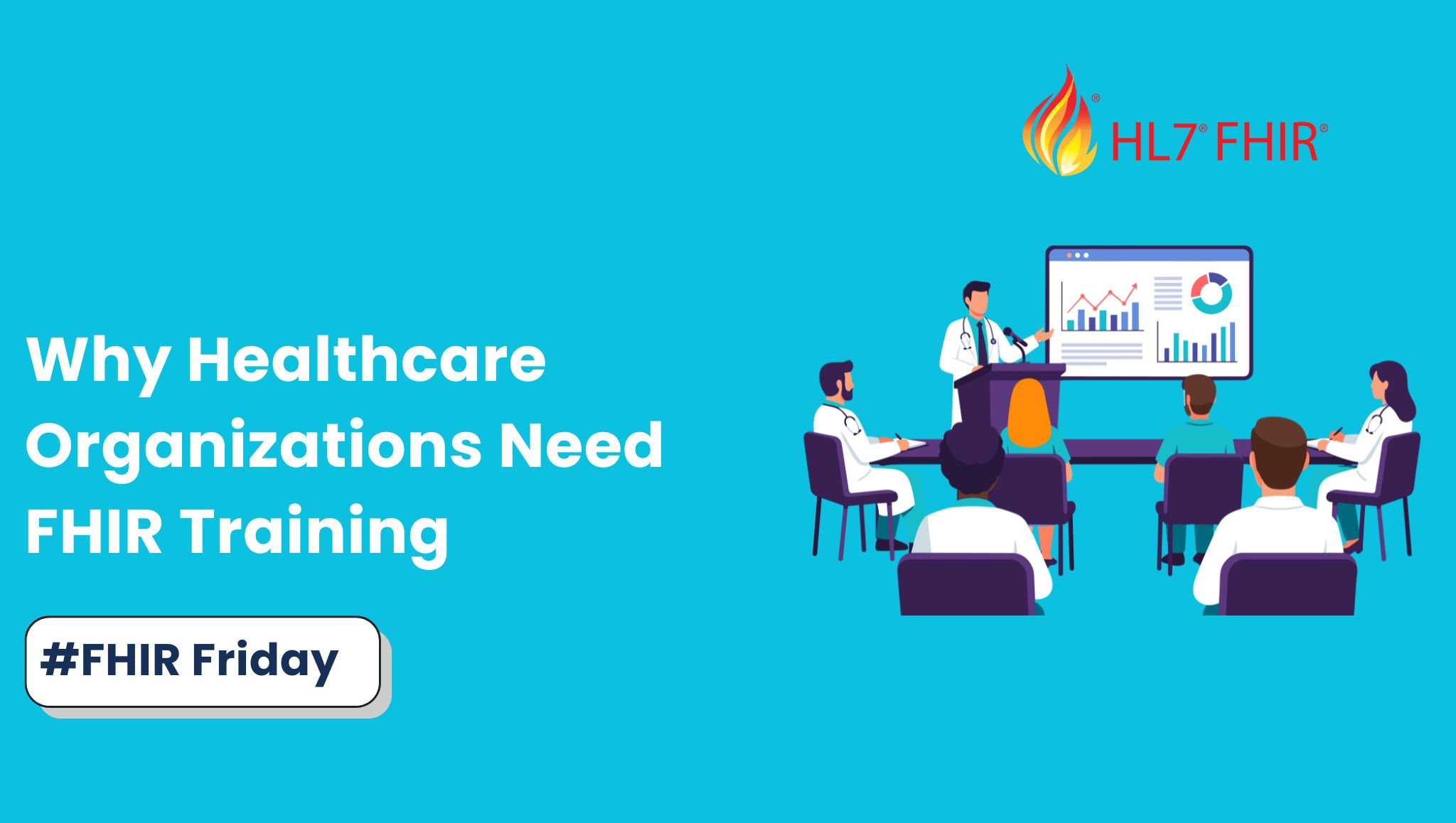
That’s Why Healthcare Organizations Need FHIR Training that want to remain compliant, competitive, and prepared for what’s next.
Why FHIR Matters More Than Ever
FHIR has quickly become the industry standard for exchanging healthcare data using modern, API-driven approaches. It plays a critical role in:
a) Meeting interoperability mandates under the 21st Century Cures Act
b) Enabling patient access to health data through third-party applications
c) Supporting secure data exchange between EHRs, payers, and providers
d) Powering digital health innovation, analytics, and AI-driven initiatives
Despite its importance, many organizations underestimate the complexity of FHIR. A lack of understanding around its core concepts often leads to delays, rework, security concerns, and low adoption.
Why FHIR Training Is No Longer Optional
1. Regulatory compliance depends on expertise
Interoperability regulations are strict and constantly evolving. Teams need a clear grasp of FHIR resources, USCDI requirements, API security standards, and audit readiness. Without proper training, organizations face higher risks of non-compliance, penalties, and operational disruption.
2. FHIR is fundamentally different from legacy HL7
FHIR isn’t just HL7 v2 wrapped in APIs. It introduces RESTful architecture, modular resources, profiles, extensions, and version-controlled interoperability. Training helps teams avoid design choices that limit scalability and true interoperability.
3. Poor expertise leads to costly failures
Many FHIR projects struggle because of incorrect architecture, over-customization, weak testing, and repeated rework. Structured training helps teams build scalable, standards-aligned solutions from the beginning.
4. FHIR enables smarter EHR optimization
With the right skills, FHIR becomes a strategic asset—not just a compliance tool. Trained teams can integrate SMART on FHIR apps, automate data exchange, improve workflows, and reduce clinician burden.
5. Training improves cross-team collaboration
FHIR sits at the intersection of technology, clinical workflows, compliance, and operations. Shared training creates alignment across developers, analysts, clinicians, and leadership, leading to faster delivery and better outcomes.
6. FHIR is foundational to the future of healthcare IT
AI, population health, remote patient monitoring, virtual care, and value-based care all depend on interoperable data. Organizations without FHIR-ready teams risk falling behind as healthcare becomes more data-driven.
The Growing Talent Gap
Demand for FHIR expertise continues to outpace supply. Many organizations struggle to upskill existing teams, hire experienced professionals, and maintain consistent interoperability knowledge. This makes structured, role-based FHIR training a strategic investment rather than an optional cost.
How the ClinDCast H.IT Pathway Addresses the Gap
ClinDCast’s Healthcare IT (H.IT) Pathway is designed around real-world interoperability challenges—not just theory. It offers practical, industry-aligned FHIR training with a strong focus on EHR workflows, compliance, and system integration. The pathway supports both technical and functional professionals while enabling long-term organizational growth.
Business Value of Investing in FHIR Training
Organizations that invest in FHIR training consistently achieve faster implementations, reduced reliance on external vendors, stronger compliance confidence, and better returns on interoperability initiatives. With the right skills in place, interoperability becomes a competitive advantage instead of a regulatory burden.
Final Thoughts
FHIR is transforming how healthcare data is exchanged, but technology alone isn’t enough. Success depends on skilled, well-trained people. Organizations that invest in FHIR training today are better positioned to optimize their EHR ecosystems, support digital health innovation, and prepare for the future of healthcare IT.
ClinDCast’s H.IT Pathway offers a clear, practical route to building real-world FHIR and interoperability expertise—equipping teams with knowledge they can apply directly to live projects and long-term initiatives.