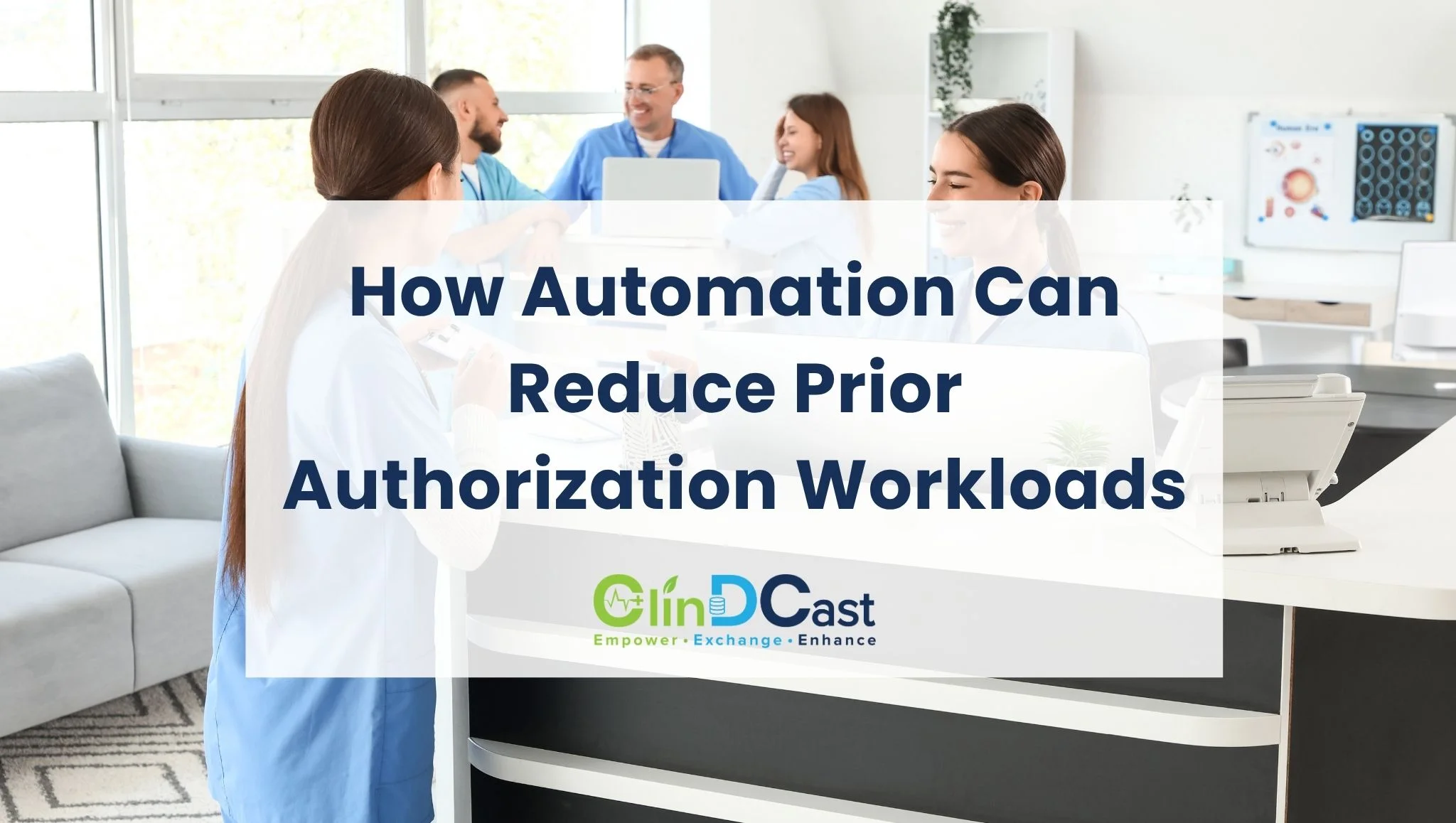











Prior authorization remains one of the most time-consuming administrative processes in healthcare. Before certain medications, procedures, diagnostic services, or treatments can be provided, healthcare providers may need approval from a patient’s health plan. While prior authorization helps manage healthcare utilization and costs, manual workflows can create significant administrative burdens for providers, payers, and patients. Prior Authorization Automation The Role of API and AI is becoming increasingly important as healthcare organizations look for more efficient ways to streamline these processes, improve information exchange, and reduce administrative complexity.
By combining application programming interfaces (APIs), artificial intelligence (AI), electronic health record (EHR) systems, and standardized healthcare data, organizations can reduce manual tasks and create more connected authorization workflows.
What Is Prior Authorization Automation?
Prior authorization automation uses digital technologies to streamline the process of requesting, submitting, reviewing, and tracking authorization requests.
Traditional workflows may require staff to search EHR records, collect clinical documentation, complete payer-specific forms, submit requests through different portals, and repeatedly check authorization status. These processes can involve multiple systems and significant manual intervention.
Automated workflows can connect clinical information with payer requirements and electronically exchange relevant information. Instead of manually gathering every data element, an automated system can retrieve structured information from the EHR and use APIs to communicate with other healthcare systems.
The objective is not simply to automate individual tasks. A well-designed solution can create a connected authorization workflow from the initial order through the final decision.
The Role of APIs in Prior Authorization
APIs are a critical component of modern prior authorization automation because they enable different healthcare applications to exchange information.
Healthcare organizations typically operate multiple systems, including EHR platforms, payer systems, revenue cycle applications, clinical decision-support tools, and patient engagement platforms. Without integration, staff may need to move information manually between these systems.
APIs provide a standardized mechanism for systems to communicate. When a provider orders a service requiring prior authorization, an integrated workflow can identify the requirement, retrieve relevant patient information, and transmit the required data to the payer system.
Healthcare interoperability standards such as FHIR (Fast Healthcare Interoperability Resources) can further support this exchange by providing standardized ways to represent and share healthcare information.
API-driven prior authorization can help organizations:
- Reduce duplicate data entry
- Improve provider-payer information exchange
- Retrieve clinical information more efficiently
- Automate authorization status updates
- Reduce reliance on payer-specific portals
- Improve workflow visibility
- Support consistent documentation
The effectiveness of API-based automation depends on interoperability, payer participation, data quality, and appropriate implementation.
How AI Supports Prior Authorization Automation
While APIs provide connectivity, AI can help organizations analyze information and automate more complex workflow activities.
Healthcare organizations generate large volumes of clinical and administrative data. AI technologies can analyze this information to identify relevant documentation, recognize patterns, and assist staff in preparing authorization requests.
For example, AI can identify relevant clinical information from patient records, summarize documentation, and determine whether required information appears to be available. Natural language processing can also help extract useful information from unstructured clinical notes.
AI can support tasks such as:
- Identifying relevant clinical documentation
- Extracting information from clinical notes
- Summarizing patient information
- Detecting missing documentation
- Classifying authorization requests
- Supporting medical necessity workflows
- Prioritizing requests for human review
- Identifying potential workflow bottlenecks
AI should support rather than replace appropriate clinical and administrative oversight. Authorization decisions can have significant consequences for patients, making transparency, human review, data governance, and appropriate validation important components of an AI-enabled workflow.
Combining APIs and AI
The greatest potential comes from combining API connectivity with AI capabilities.
Consider a provider ordering an advanced diagnostic procedure. An integrated system can use APIs to retrieve relevant patient information from the EHR and communicate with the payer. AI can then analyze available documentation, identify missing information, and assist in preparing the authorization request.
Once submitted, APIs can facilitate status updates while AI-powered workflows can help staff identify requests requiring additional attention.
This creates a connected workflow:
EHR → Data Retrieval → AI-Assisted Documentation → API-Based Submission → Payer Review → Automated Status Updates
Instead of treating prior authorization as a series of disconnected administrative tasks, organizations can develop a more integrated digital workflow.
Benefits of Prior Authorization Automation
Automation can provide benefits across the healthcare ecosystem.
For providers, reducing repetitive administrative work can allow staff to focus on higher-value activities. Faster access to relevant information can also reduce delays in submitting authorization requests.
For patients, streamlined workflows may help reduce unnecessary delays in receiving services or treatments.
For payers, standardized digital information exchange can improve the consistency and completeness of incoming requests and support more efficient review processes.
Organizations can also gain greater visibility into authorization volumes, processing times, denial patterns, and outstanding requests. This information can support operational improvements and identify recurring workflow issues.
Challenges to Consider
Despite its potential, prior authorization automation is not without challenges.
Healthcare organizations often work with multiple payers that have different requirements and workflows. Legacy systems, inconsistent data formats, incomplete documentation, and limited interoperability can make integration difficult.
AI introduces additional considerations, including data privacy, model validation, explainability, bias, and governance. Organizations must establish appropriate controls for sensitive health information and ensure automated processes comply with applicable regulatory and organizational requirements.
Successful implementation therefore requires more than deploying an AI tool. It requires an integrated strategy covering interoperability, data quality, security, workflow design, governance, and human oversight.
The Future of Prior Authorization
Prior authorization is moving toward a more digital and interoperable model. APIs, FHIR-based interoperability, AI, and EHR integration can help healthcare organizations create faster and more connected workflows.
The long-term opportunity lies in combining these technologies rather than implementing them independently. APIs can provide the infrastructure for data exchange, while AI can help organizations interpret information and automate appropriate workflow steps.
As healthcare organizations modernize their IT environments, prior authorization automation can become an important component of broader digital transformation. Strong interoperability and data foundations can help organizations integrate intelligent automation into administrative and clinical workflows.
Prior authorization automation is ultimately about more than reducing paperwork. It is about connecting healthcare data, systems, and workflows so providers can spend less time navigating administrative processes and more time supporting patient care.