






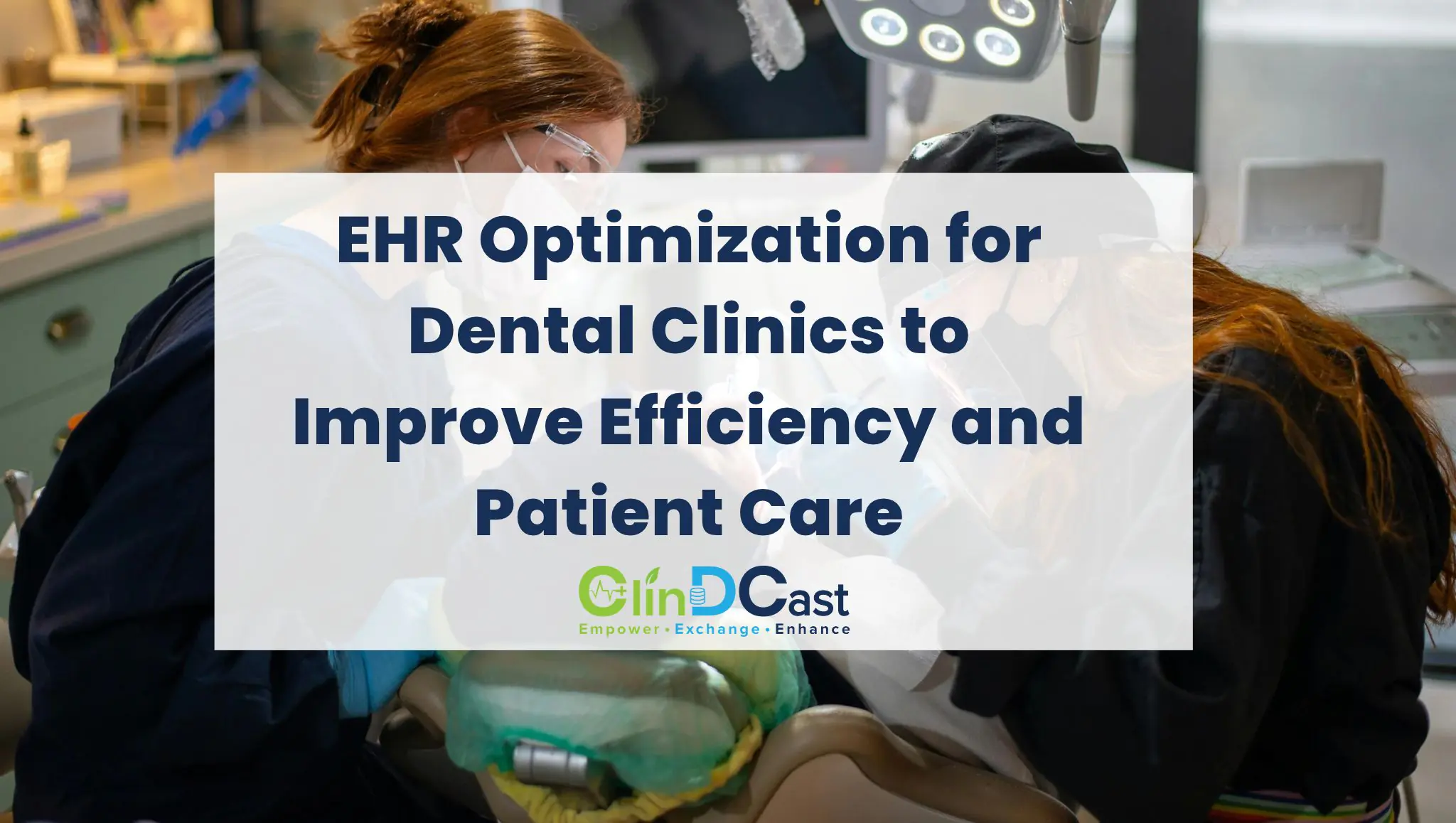
Dental Practices are becoming increasingly reliant on Digital Technology to help them manage patient data, make appointments and record treatment. Whilst systems such as Electronic Health Records and Dental Practice Management Systems can be used to help manage this data, inefficient processes, duplicate data, non-integrated systems and limited reporting capabilities can cause issues.
EHR Optimization for Dental Clinics to Improve Efficiency and Patient Care focuses on improving existing systems, integrations, and workflows to support better operational efficiency, accurate documentation, data security, and patient care.
Rather than replacing technology unnecessarily, dental practices can optimize their current systems to address inefficiencies and align digital infrastructure with clinical and administrative requirements.
What Is EHR Optimization for Dental Clinics?
To optimize an EHR you will want to make sure that it is configured to provide the best functionality and integration possible to meet your organization’s requirements.
Dental clinics might want to optimize their EHR by making it easier to document clinical information, improve patient history management, integrate well with other compatible applications, improve security and provide easier access to reports.
Depending on the type of EHR used in your practice (Dental specific, Practice management or integrated) your optimization should include features available on the EHR platform and your dental clinic’s specific requirements.
7 Ways Dental Clinics Can Optimize Their EHR Systems
1. Streamline Clinical Documentation
Clinical documentation is essential to provide an accurate clinical history and treatment history for patients. However, complex templates can be cumbersome for dental professionals.
Reviewing templates currently used will allow you to ensure that common fields are consistent across your clinic. This will reduce any unnecessary processes whilst ensuring important clinical information can still be recorded.
Having well designed processes will enable dentists and hygienists to quickly and consistently record information. Regular reviews can be carried out to ensure there are no areas missing and to identify any ways to improve the documentation.
2. Improve Patient Data Accuracy
Duplicates, incorrect contact details, inconsistent patient information and incomplete records can cause issues.
Dental surgeries should have processes in place to reduce duplicates, ensure data is inputted consistently, review patient information regularly and put processes in place to correct errors.
Having accurate records will allow authorised personnel to find the information they need and will make sure records are consistent.
If you are using multiple applications within your dental surgery, you should also consider how patient information is shared between them.
3. Integrate EHR and Practice Management Systems
Many dental practices will have different systems for managing appointments, images, account management, clinical records and communication with patients. This can lead to lots of repeated data entry and moving between different systems to complete simple tasks.
Integrating systems can allow compatible systems to share relevant data.
Potential integration opportunities include:
- Connecting clinical records with dental practice management software.
- Linking dental imaging applications to relevant patient records.
- Synchronizing appointment and patient information between compatible systems.
- Connecting operational reporting tools to authorized data sources.
- Supporting appropriate information exchange with external medical providers.
HL7 and FHIR standards may be used to provide healthcare data sharing. However, the vendors and use cases must be a good match. The clinics should consider the vendors’ capabilities, API, security requirements and maintenance needs.
4. Strengthen Patient Data Security
Dental clinics deal with sensitive data. Steps need to be taken to ensure this sensitive data is protected.
Ensure that EHR has been optimised. This can be done by ensuring that there are the right access rights, using multifactor authentication if available, audit trails, software updates and a good backup system. Training staff to recognise phishing attempts, properly manage patient data and report any possible security issues is also important.
For dental clinics in the US it should be ensured that there are measures in place to protect electronic protected health information as per HIPAA requirements. Practices should also look at the security responsibilities of their tech providers.
5. Improve Scheduling and Administrative Workflows
Staff workload may be increased by inefficiencies within your clinic’s admin systems. This includes duplicate bookings, inconsistent booking systems and manually tracking patients.
By looking at your booking processes, clinics can identify areas where they can streamline their booking process. This may include creating appointment types, automating reminders and integrating a booking system with a compatible patient management.
Automate whilst taking into consideration how you want to communicate with patients, data protection and oversight.
This will help reduce repetitive administration tasks whilst ensuring accurate record keeping and communication.
6. Use Reporting and Analytics Effectively
EHR and practice management systems can provide valuable information. However, accurate data and having clear KPIs will provide useful reporting.
Dental practice managers may review:
- Appointment utilization and cancellation patterns.
- Patient recall and follow-up activity.
- Treatment acceptance trends.
- Clinical documentation completeness.
- Administrative workflow performance.
- Revenue-cycle indicators, where reliable data is available.
This can help identify areas of inefficiency. For example, if there are frequent cancellations it may be worthwhile to review your recall system.
Ensure that the data is accurately verified in clinics. Ensure KPIs are clearly defined and that the correct privacy rules are applied when accessing reports.
7. Train Staff and Evaluate Performance
However, even well set up EHRs can suffer if staff are not sufficiently trained.
Training will need to be varied depending on what each member of staff (dentist, hygienist, assistant and admin) will require. It should ensure they understand common processes, how to document and report any technical issues.
Feedback from day-to-day users is important for dental clinics. This will give insight into any confusing features, unnecessary steps and common issues. System reviews ensure that the practice can keep up to date with software changes, new processes and integration opportunities.
Common EHR Optimization Challenges
Dental clinics may encounter several challenges when improving their technology environments.
- Legacy systems: Older applications may have limited integration capabilities, requiring vendor support or alternative technical approaches.
- Data migration: Transferring information between systems can introduce inconsistencies without proper data mapping, validation, and reconciliation.
- Staff adoption: Employees may resist unfamiliar workflows. Training and clear communication can improve adoption.
- Budget limitations: Smaller clinics may have limited IT resources. Prioritizing improvements according to impact, cost, and implementation effort helps manage resources effectively.
- Security and compliance: System changes must be evaluated for privacy, security, and applicable regulatory requirements.
A structured optimization plan helps clinics address these challenges without introducing unnecessary complexity.
How ClinDCast Can Help Your Dental Clinic
ClinDCast helps dental clinics address technology challenges through EHR optimization, data integration, interoperability, data conversion, and healthcare IT support.
We can help your dental clinic identify workflow inefficiencies, improve patient data accessibility, and explore practical technology solutions.
- EHR Optimization: Improve clinical workflows, documentation, and data accessibility.
- System Integration: Connect compatible dental applications and reporting tools.
- Data Conversion: Support accurate patient data migration and validation.
- Data Management: Improve patient information management and reporting.
- Healthcare IT Support: Identify technical challenges and optimization opportunities.
Whether you manage a single dental clinic or multiple locations, ClinDCast can help improve your technology infrastructure.
Contact ClinDCast to explore EHR optimization solutions for your dental clinic.