











Healthcare organizations today rely on seamless, secure, and real-time data exchange to deliver high-quality patient care. Hospitals, specialty clinics, laboratories, pharmacies, payers, telehealth platforms, and population health systems must share electronic health information efficiently without delays or fragmented data silos.
API-based healthcare data exchange has become the foundation of modern healthcare interoperability. It enables secure communication between Electronic Health Records (EHRs), clinical systems, revenue cycle platforms, and digital health applications using standardized protocols.
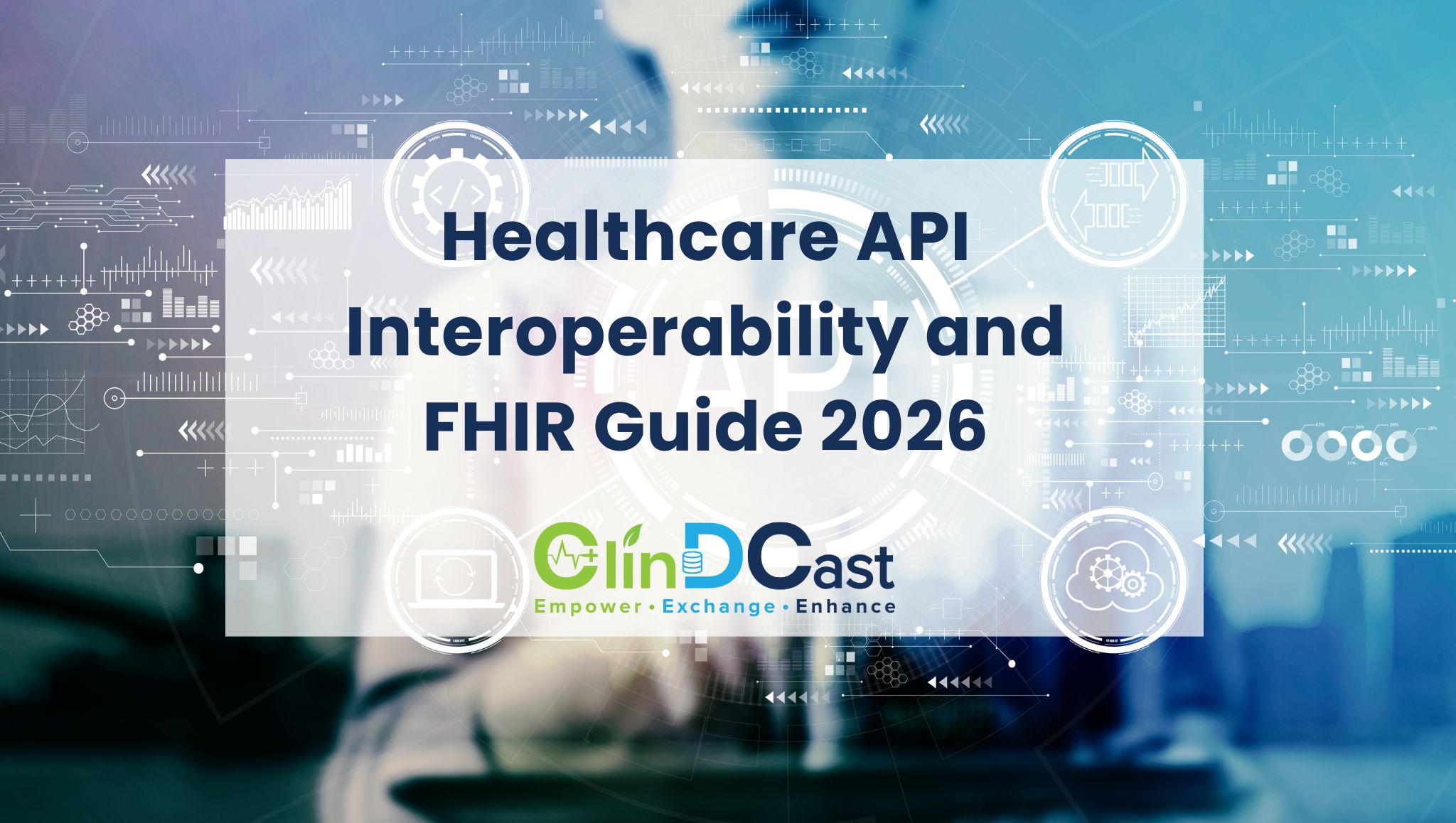
This blog explains Healthcare API Interoperability and FHIR Guide 2026 what healthcare APIs are, how they work, the key interoperability standards involved, compliance requirements, benefits, implementation challenges, and future trends shaping digital health transformation.
What Is API-Based Healthcare Data Exchange?
An API (Application Programming Interface) allows different software systems to communicate with each other securely and efficiently. In healthcare IT, APIs enable structured clinical data exchange between systems such as:
a) Electronic Health Record (EHR) platforms
b) Laboratory information systems
c) Imaging systems
d) Payer and insurance platforms
e) Mobile health applications
Instead of sending full documents or static files, APIs allow systems to request specific patient data in real time.
For example:
a) A telehealth platform retrieves a patient’s medication history directly from an EHR.
b) A payer system verifies insurance eligibility instantly.
c) A mobile health app securely accesses lab results.
d) A specialist reviews diagnostic reports from another hospital network.
This real-time health information exchange improves clinical decision-making, reduces administrative burden, and enhances care coordination.
Why Healthcare Needed API-Driven Interoperability
Historically, healthcare data exchange relied on outdated and inefficient methods, including:
a) Fax-based medical record sharing
b) Batch file transfers
c) Manual record requests
d) Custom point-to-point integrations
These approaches created major interoperability challenges. Providers experienced delayed treatment decisions, duplicate diagnostic testing, fragmented patient histories, and increased administrative workload. In many cases, these inefficiencies contributed to clinician burnout.
API-driven interoperability solves these problems by enabling standardized, scalable, and secure data integration across healthcare systems. Instead of building custom integrations for every system, organizations can rely on consistent API frameworks.
Key Standards Powering Healthcare APIs
Healthcare APIs operate within strict regulatory and technical frameworks to ensure data security, consistency, and compliance.
HL7 (Health Level Seven International)
HL7 develops global standards for electronic health data exchange. It provides structured frameworks that allow diverse healthcare IT systems to communicate effectively and consistently.
FHIR (Fast Healthcare Interoperability Resources)
FHIR is the most widely adopted modern interoperability standard. It uses RESTful APIs and supports structured data formats such as JSON and XML.
FHIR enables granular access to specific healthcare data elements, including:
a) Patient demographics
b) Allergies and medical conditions
c) Medication lists
d) Laboratory results
e) Clinical observations
FHIR APIs are central to EHR integration, Health Information Exchanges (HIEs), and patient portal connectivity.
21st Century Cures Act
The 21st Century Cures Act mandates healthcare interoperability in the United States and prohibits information blocking. It requires certified health IT systems to provide standardized API access to patient data, accelerating digital transformation and improving transparency across the healthcare ecosystem.
How API-Based Healthcare Data Exchange Works
Healthcare APIs typically follow a secure and structured workflow:
a) A requesting system sends an authenticated API call.
b) The receiving system verifies identity using OAuth 2.0 and token-based authentication.
c) The requested clinical data is retrieved from the database.
d) The data is returned in a standardized format such as FHIR JSON.
Throughout this process, multiple security mechanisms protect patient information, including:
a) Data encryption in transit and at rest
b) Role-based access controls
c) Audit logging and monitoring
d) HIPAA-compliant safeguards
This structured architecture ensures secure, reliable, and real-time health information exchange.
Benefits of API-Based Healthcare Data Integration
API-driven interoperability provides measurable clinical and operational benefits.
1. Real-Time Access to Patient Data
Providers gain instant access to comprehensive medical records, helping reduce medical errors and improve treatment outcomes.
2. Improved Care Coordination
APIs connect primary care providers, specialists, laboratories, pharmacies, and payers, enabling seamless transitions of care.
3. Enhanced Patient Engagement
Patient portals and mobile applications can securely retrieve up-to-date medical information, empowering individuals to actively manage their health.
4. Revenue Cycle Optimization
Eligibility verification, claims processing, prior authorization workflows, and denial management become faster and more accurate.
5. Scalable Digital Health Innovation
Healthcare organizations can integrate AI-powered analytics, remote patient monitoring tools, and telehealth platforms without rebuilding core systems.
Security and Compliance in Healthcare APIs
Healthcare cybersecurity remains a top priority. API implementations must comply with strict regulatory and security standards, including:
a) HIPAA privacy and security requirements
b) End-to-end data encryption
c) Multi-factor authentication
d) Audit trails and continuous monitoring
e) Role-based access controls
Proper API governance and risk management frameworks significantly reduce the risk of ransomware attacks, unauthorized access, and data breaches.
Common Challenges in API Implementation
Despite its benefits, API-based healthcare data exchange presents several practical challenges:
a) Integration with legacy healthcare IT systems
b) Data normalization and standardization inconsistencies
c) Vendor interoperability limitations
d) Implementation and maintenance costs
e) Shortage of skilled healthcare IT professionals
To overcome these barriers, many healthcare organizations require interoperability strategy planning, technical consulting, and experienced integration teams.
Real-World Use Cases of Healthcare APIs
Healthcare APIs are transforming both operational and clinical workflows across the industry.
Common use cases include:
a) Health Information Exchanges connecting regional hospital networks
b) Remote patient monitoring platforms integrating wearable device data
c) Value-based care analytics pulling data from multiple systems
d) AI-powered clinical decision support tools
e) Automated eligibility verification in revenue cycle management
These applications improve patient outcomes, reduce operational costs, and support data-driven healthcare delivery models.
The Future of API-Based Healthcare Interoperability
Healthcare IT is rapidly shifting toward API-first and cloud-enabled architectures. Emerging trends include:
a) Nationwide health data networks
b) AI-driven predictive analytics powered by integrated datasets
c) Blockchain-enabled secure health data sharing
d) Patient-controlled data portability
e) Advanced API lifecycle management and governance frameworks
Organizations investing in modern interoperability infrastructure today will be better positioned for long-term competitive advantage in an increasingly digital healthcare environment.
Conclusion
API-based healthcare data exchange serves as the backbone of secure, real-time, and standardized health information sharing. By leveraging FHIR standards, complying with federal interoperability regulations, and implementing secure API architectures, healthcare organizations can eliminate data silos and accelerate digital transformation.
As healthcare continues to evolve toward value-based care, telehealth expansion, and AI integration, API-driven interoperability will remain essential for delivering connected, efficient, and patient-centered care.