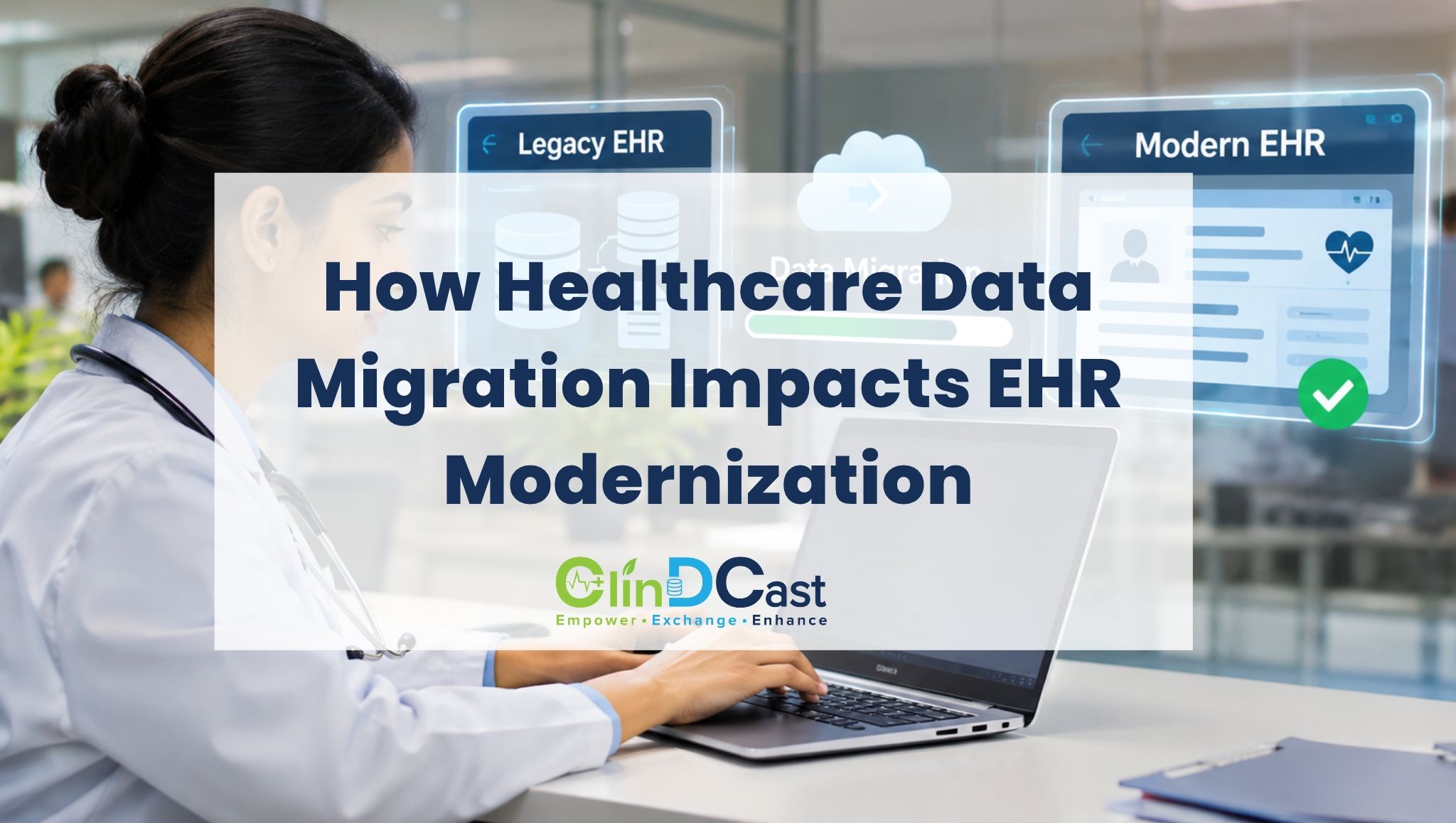











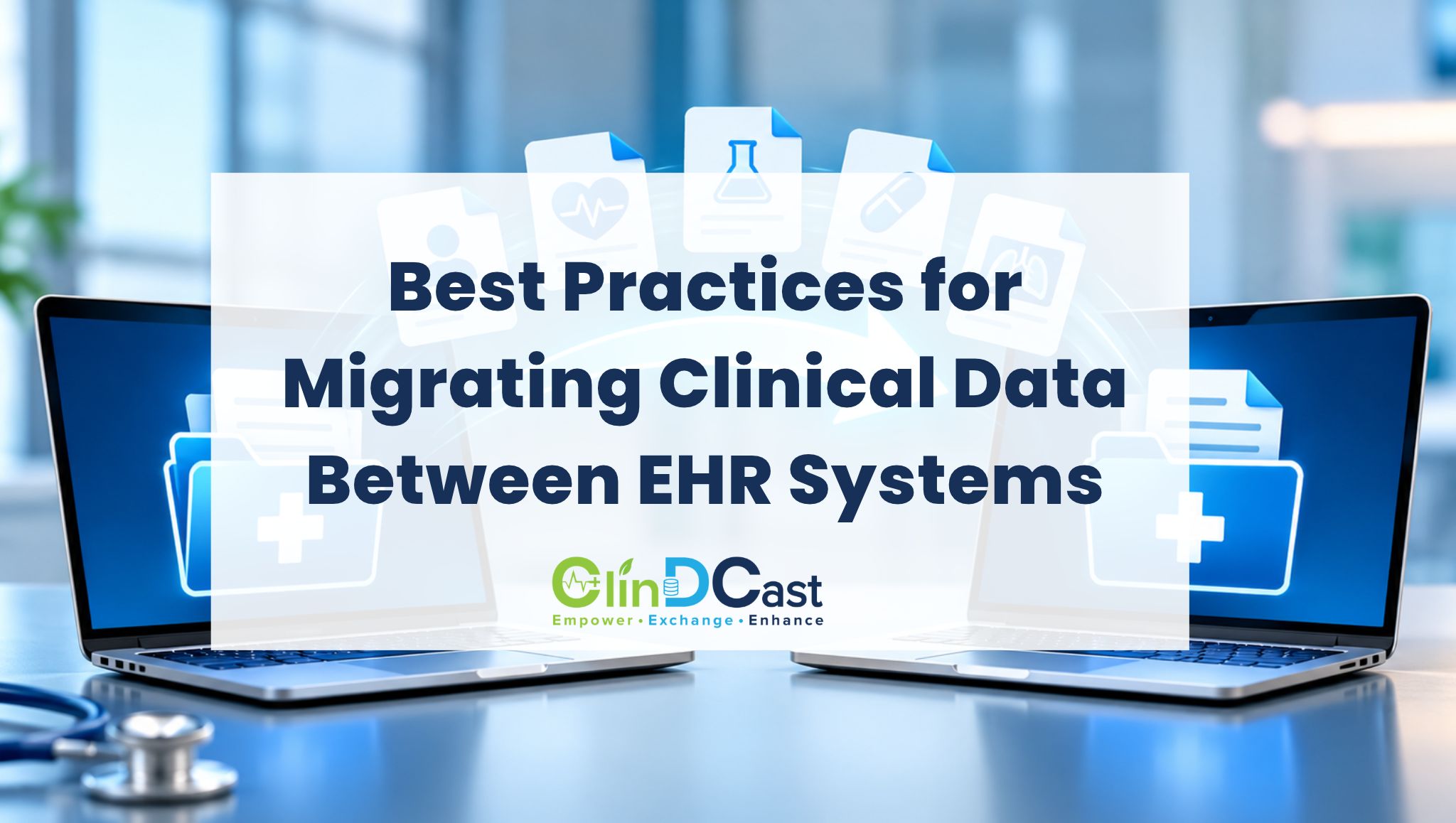
More and more healthcare providers are migrating to new electronic health records (EHRs) in order to improve processes, better provide care to patients, improve interoperability, and meet changing business needs. However, migrating clinical data can be a complicated process.
The data within an EHR system is very sensitive. Within an EHR, patient information such as medical history, diagnosis, medication, allergies, lab results, patient notes, imaging reports and treatment plan can be found. Inconsistencies in data may cause poor decision making, process issues or a risk to patient safety.
Success in an EHR migration project means that clinical data has been migrated accurately, completely, and with context to ensure it remains accessible. In this guide we look at Best Practices for Migrating Clinical Data Between EHR Systems to ensure data is preserved, and is compliant, while continuing care for patients.
1. Conduct a Comprehensive Data Assessment
Before beginning the migration, assess the current EHR environment to grasp the type, volume, and quality of clinical information that must be transferred.
Healthcare data can be spread across several databases, legacy applications, and interconnected systems. Pinpointing these sources helps avoid missing records and incomplete patient histories.
The assessment should cover:
- Patient demographics and medical histories.
- Diagnoses, medications, and allergies.
- Laboratory results and diagnostic reports.
- Clinical notes and treatment plans.
- Imaging records and document attachments.
- Historical encounters and immunization records.
Best Practice: Create a detailed data inventory and identify duplicate, outdated, and incomplete records before beginning the EHR data conversion process.
2. Develop Accurate Source-to-Target Data Mapping
Data may be incorrectly mapped or lose their clinical meaning if they are not appropriately mapped between systems with varying database structure, field names and terminology.
The source to target mapping specifies how the information within the legacy EHR system will be represented in the new system.
Healthcare organizations should consider standardized terminologies such as:
- SNOMED CT: Standardizes clinical concepts and terminology.
- LOINC: Identifies laboratory tests and clinical observations.
- ICD-10: Supports diagnosis classification.
- RxNorm: Standardizes medication identification.
Clinical experts and technical teams should collaborate to validate mapping rules and ensure that medical information retains its original context.
Best Practice: Maintain documented mapping specifications and test complex clinical data transformations before production migration.
3. Leverage HL7 and FHIR for Interoperability
Healthcare interoperability is essential for transferring information between different EHR platforms and connected healthcare applications.
The HL7 and FHIR standards enable structured exchange of clinical data and help lessen compatibility challenges. HL7 v2 allows healthcare systems to exchange messages concerning patient admissions, registrations, laboratory results, and clinical orders.
HL7 FHIR offers standardized healthcare resources and APIs for exchanging information among modern healthcare applications. Frequently used FHIR resources include Patient, Encounter, Condition, Observation, MedicationRequest, and DiagnosticReport.
Applying these standards can enhance healthcare data integration and support communication among EHR systems, laboratory platforms, and other clinical applications.
Best Practice: Evaluate the interoperability capabilities of both systems and establish appropriate HL7 interfaces or FHIR-based APIs for secure and consistent data exchange.
4. Prioritize Clinical Data Validation
Data validation is critical to ensuring that migrated patient information is accurate and complete. A successful data transfer does not necessarily mean that every record has been migrated correctly.
Healthcare organizations should validate:
- Patient demographics and identifiers.
- Medication and allergy information.
- Laboratory results and clinical observations.
- Historical encounters and physician notes.
- Document attachments and timestamps.
- Duplicate and missing patient records.
Automated validation scripts, reconciliation reports, and clinical reviews can help identify discrepancies before the new EHR becomes operational.
Best Practice: Perform sample-based testing and clinical validation, giving additional attention to high-risk information such as allergies, medication records, and critical laboratory results.
5. Maintain Patient Data Security and HIPAA Compliance
Clinical data contains sensitive Protected Health Information (PHI), making information security a major consideration during healthcare data migration.
Organizations handling electronic PHI must implement appropriate safeguards under the HIPAA Security Rule.
Important security measures include:
- Encryption during data transfer and storage.
- Role-based access controls.
- Multi-factor authentication where appropriate.
- Secure data transfer protocols.
- Audit logging and activity monitoring.
- Regular security risk assessments.
- Organizations should also review Business Associate Agreements when third-party vendors handle PHI.
Best Practice: Integrate data privacy, access management, and security controls into every stage of the EHR migration process.
6. Conduct Test Migration Before Go-Live
Before any clinical data is moved into the production environment, a test migration is useful for uncovering technical problems.
Healthcare IT teams ought to move a representative sample of records into a testing environment, then check that the information shows up correctly in the destination EHR.
The testing process should cover data extraction, transformation, import, clinical validation, and interface testing.
Clinical stakeholders should take part in User Acceptance Testing (UAT) as well, so they can confirm that the migrated records support routine clinical workflows.
Best Practice: Conduct multiple testing cycles, resolve identified discrepancies, and obtain approval from clinical and technical stakeholders before production deployment.
7. Plan Cutover and Post-Migration Support
The final migration, or cutover, requires coordination between IT teams, healthcare professionals, and EHR vendors.
A structured cutover plan should define migration schedules, responsibilities, downtime arrangements, data reconciliation, and contingency procedures.
After implementation, organizations should monitor:
- Data quality and record accessibility.
- EHR performance and system availability.
- HL7 interface and FHIR integration errors.
- User-reported migration issues.
- Missing or incorrectly associated clinical records.
Healthcare staff should receive role-specific training to understand the new EHR workflows and access historical patient information.
Best Practice: Establish a dedicated post-migration support process to resolve data discrepancies and maintain continuity of clinical operations.
How ClinDCast Supports EHR Data Migration
At ClinDCast, we help healthcare organizations address EHR data conversion, interoperability, and healthcare technology challenges.
Our capabilities include:
- EHR data conversion and migration support.
- HL7 v2 integration and interface development.
- FHIR interoperability and API integration.
- Clinical data validation and transformation.
- EHR implementation and optimization.
Whether modernizing legacy systems or transitioning to a new EHR platform, ClinDCast supports organizations in building secure, connected, and efficient healthcare IT environments.