













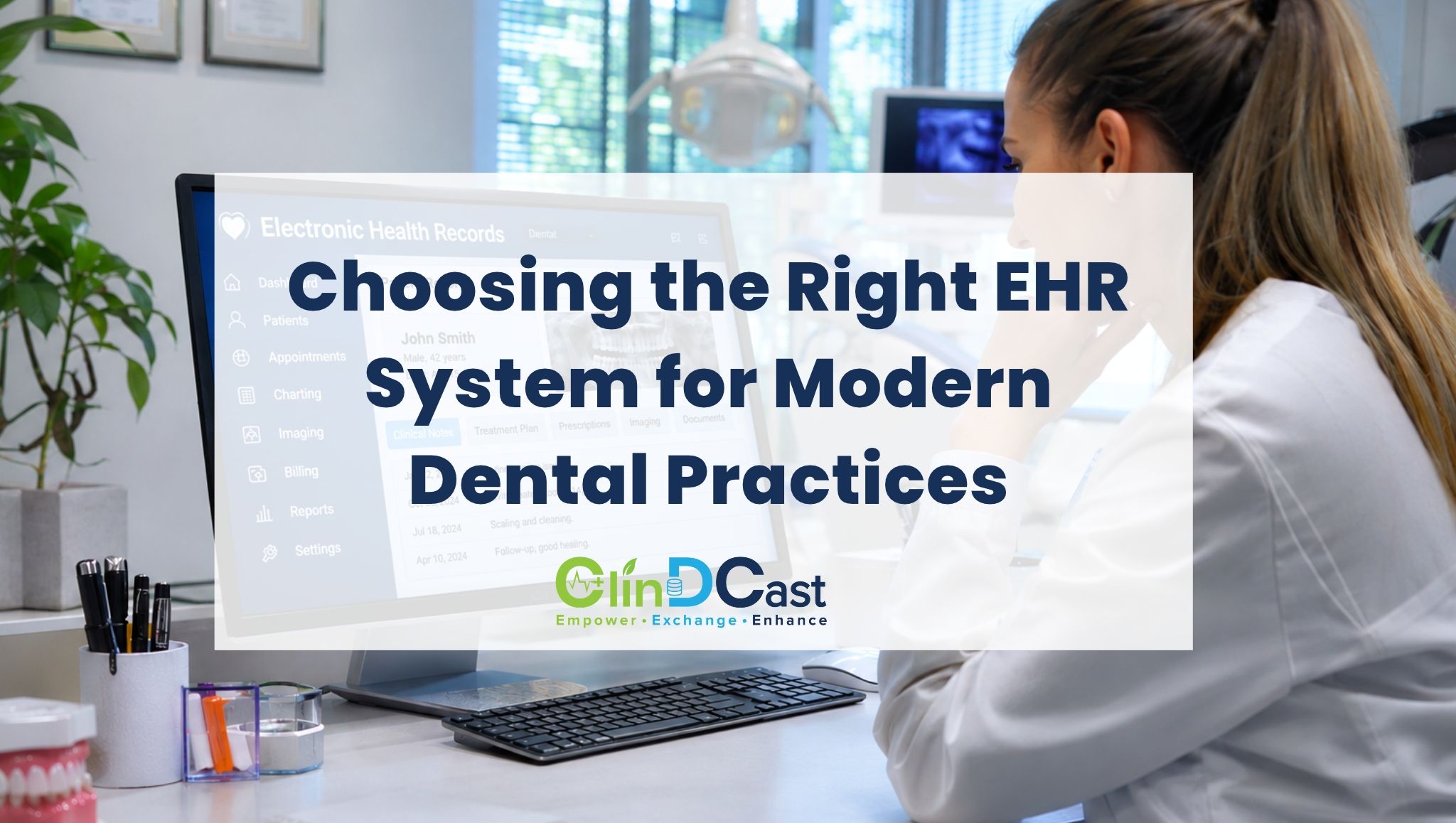
The dental market is rapidly changing. Technology now plays a central role within the dental market, including with patient care, record keeping and managing dental practices. To ensure they provide high quality services, dental clinics rely heavily on technology to manage their clinic (e.g. digital records, treatment planning and appointments). However choosing the correct technology can be difficult. This makes Choosing the Right EHR System for Modern Dental Practices an important consideration for dental professionals looking to modernize their operations and improve patient experiences.
An Electronic Health Record (EHR) is much more than an electronic version of a paper file. It is one place where patient records, notes, treatments and diagnoses are managed. Choosing the correct EHR system will help reduce the amount of admin that has to be done, make it easier to access information and help provide better coordinated care for patients.
1. Understand Your Dental Practice’s Requirements
Determine your dental practice requirements first.
A small independent dental practice may only require basic features for registering patients, booking appointments, recording treatments and managing billing. Whereas a dental practice with multiple locations may require centralised patient records, advanced reporting, integration and standardised processes across their locations.
Consider the following requirements:
- Digital patient registration and record management.
- Clinical documentation and treatment planning.
- Dental imaging and diagnostic integration.
- Appointment scheduling and reminders.
- Billing and insurance management.
- Patient communication and engagement.
- Reporting and performance analytics.
Understanding these requirements helps practices select an EHR system that aligns with their existing workflows and future objectives.
2. Evaluate User Experience and Clinical Workflow Integration
An EHR system ought to make everyday tasks easier instead of adding more complexity.
Dental professionals often move back and forth between patient consultations, clinical documentation, diagnostic imaging, and administrative duties. A complex interface can hinder these tasks and generate needless administrative effort.
When evaluating an EHR platform, consider:
- An intuitive and easy-to-navigate interface.
- Quick access to patient histories and treatment records.
- Customizable clinical templates.
- Efficient documentation workflows.
- Compatibility with existing dental practice management processes.
A user-friendly EHR system can improve staff productivity while allowing dental professionals to focus more on patient care.
3. Prioritize Interoperability and Data Integration
Interoperability is an important factor to consider when choosing an EHR.
Dental clinics often require the ability to share patient information with hospitals, diagnostic labs, specialists and other healthcare professionals. If systems are not interoperable then this can cause information fragmentation.
Having an interoperable EHR will allow secure data sharing and improve the completeness of patient records within healthcare organisations.
Integration between various healthcare applications can be achieved using technologies such as HL7, FHIR and APIs.
Dental practices should evaluate whether their selected EHR platform supports:
- Integration with external healthcare systems.
- Secure patient information exchange.
- Diagnostic and laboratory data integration.
- Standardized healthcare data formats.
- APIs for connecting third-party applications.
Working with experienced healthcare IT consultants can help dental organizations evaluate integration requirements and develop appropriate interoperability strategies.
4. Ensure Data Security and Regulatory Compliance
Dental practices hold sensitive data relating to your patients including their medical history, personal information, diagnostic results and treatment.
This should be a key consideration when choosing an EHR system.
For dental organisations within the USA it’s vital that you are compliant with the relevant HIPAA regulations.
Important security capabilities include:
- Role-based access controls.
- Data encryption during storage and transmission.
- Secure user authentication.
- Audit trails and access monitoring.
- Regular data backups.
- Disaster recovery and business continuity planning.
Dental practices should also evaluate how EHR vendors manage data storage, security updates, and incident response.
A secure EHR environment helps protect patient confidentiality and supports trust between patients and healthcare providers.
5. Consider Scalability and Future Technology Needs
Avoid choosing an EHR system based solely on what your dental practice needs now.
As you grow your clinic, your technological needs may evolve, for example, a one location clinic may become multi-located, have more patients, or offer extra diagnostic and treatment options.
The EHR system should provide scalability to allow your practice to grow without having to frequently change platforms.
Evaluate whether the system can accommodate:
- Multiple clinic locations.
- Increasing patient volumes.
- Additional users and healthcare professionals.
- New healthcare technology integrations.
- Advanced reporting and analytics.
- Cloud-based infrastructure, where appropriate.
Scalable technology allows dental organizations to adapt to changing business requirements while maintaining operational continuity.
6. Evaluate Data Migration and Implementation Support
When using a new EHR system within your dental practice you will need to think about migrating patient data.
If you are using older systems, separate databases or have different formats for recording patient data it can make data migration difficult.
An effective migration strategy should include:
- Data assessment: Identify existing patient records, clinical documents, and historical information.
- Data mapping: Match existing data fields with the structure of the new EHR platform.
- Data conversion: Transform information into compatible formats.
- Data validation: Verify accuracy, completeness, and consistency.
- System testing: Confirm that migrated records are accessible and functioning correctly.
- Staff training: Prepare employees to use the new platform effectively.
Experienced healthcare IT consulting partners can help organizations plan and execute data migration projects while minimizing operational disruption.
7. Compare Total Cost of Ownership
The cost of an EHR system extends beyond its initial purchase or subscription fee.
Dental practices should evaluate the overall investment required to implement, maintain, and upgrade the platform.
Consider the following expenses:
- Software licensing or subscription fees.
- Implementation and configuration.
- Data migration and conversion.
- Staff training.
- Third-party integrations.
- Technical support and maintenance.
- Future upgrades and infrastructure requirements.
Comparing the total cost of ownership helps dental organizations make informed technology investments and avoid unexpected expenses.
How ClinDCast Supports Healthcare IT Modernization for Dental Clinics
Choosing and implementing the correct EHR is an important part of the dental clinic and understanding the clinical workflow, technical requirements, data management and interoperability challenges are essential. ClinDCast can help dental clinics overcome these technical challenges by providing healthcare IT consultation and solutions.
Its service capabilities can support dental practices with relevant projects, including:
- EHR Services: Support for EHR implementation, optimization, and workflow improvements to help dental clinics manage patient information and clinical documentation more efficiently.
- Data Conversion and Migration: Assistance with transferring, converting, and validating patient records when dental clinics transition from legacy systems to modern EHR platforms.
- Interoperability Solutions: Expertise in HL7, FHIR, and API-based integration to help dental clinics exchange patient information securely with hospitals, diagnostic laboratories, specialists, and other healthcare systems.
- Managed Services: Ongoing technology support to help dental clinics maintain reliable IT operations, address technical challenges, and improve system performance.
- Enterprise Analytics: Support in transforming healthcare data into meaningful insights that can help dental clinics improve reporting, monitor operational performance, and make informed business decisions.
Using its healthcare IT consulting knowledge and methodical approach to technological advancements, ClinDCast can provide dental clinics with improved digital infrastructure, information management and integrated health care.