









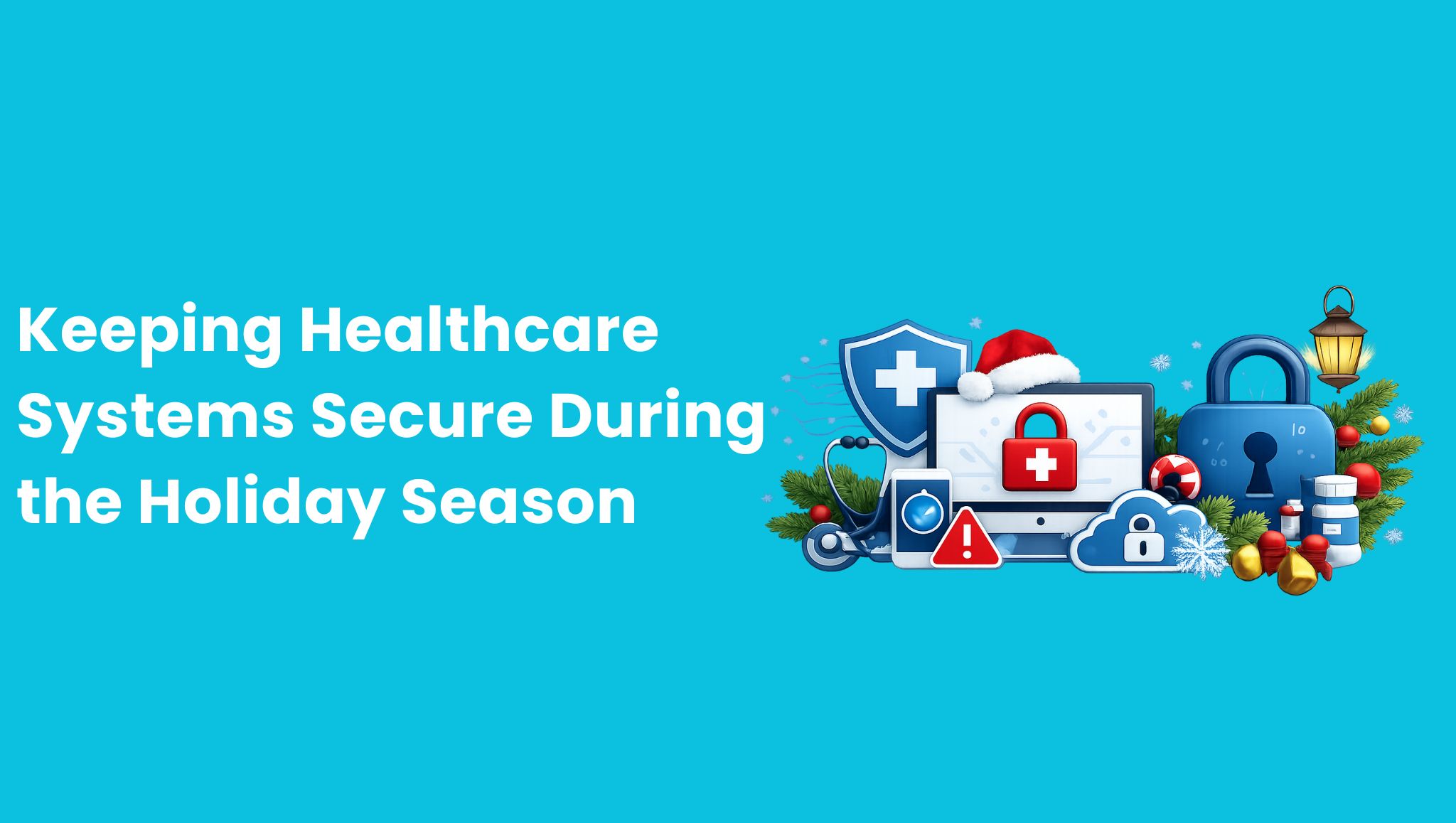
Keeping Healthcare Systems Secure During the Holiday season is more important than ever for healthcare organizations with reduced staffing, employee travel, and slower year-end operations, cybercriminals often see the holidays as the perfect window to strike. Even as schedules change, patient care must continue without disruption—making hospitals and health systems especially vulnerable to phishing scams, ransomware attacks, and unauthorized access attempts.
Healthcare organizations remain prime targets because they manage highly sensitive patient data and rely on systems that must be available at all times. A single security incident during the holidays can jeopardize patient safety, disrupt clinical workflows, and lead to serious compliance and financial consequences. Taking a proactive approach to holiday cybersecurity—such as strengthening monitoring, reinforcing access controls, and preparing incident response plans—helps reduce risk, safeguard patient information, and ensure uninterrupted care when it matters most.
Why the Holiday Season Increases Security Risk
The holidays create a unique combination of technical and human vulnerabilities within healthcare environments:
a) Reduced staffing and limited on-call coverage can delay incident detection and response
b) Key decision-makers may be unavailable, slowing containment and remediation efforts
c) Routine security activities such as patching, audits, and access reviews are often postponed
Attackers are well aware of these gaps and intentionally time attacks around holidays, weekends, and year-end slowdowns to maximize disruption and pressure.
Common Cyber Threats During the Holidays
Healthcare organizations typically experience an increase in the following threats during holiday periods:
a) Phishing attacks disguised as holiday greetings, delivery notifications, or HR communications
b) Ransomware attacks targeting EHRs, imaging systems, and scheduling platforms
c) Third-party breaches that exploit vendors or service providers with weaker holiday security controls
In healthcare settings, even short periods of downtime can directly impact patient safety, making these threats especially dangerous.
Strengthening Access Controls and Identity Security
Identity-based attacks remain one of the most common entry points for breaches. Holiday security planning should prioritize:
a) Reviewing user access and removing unnecessary privileges for temporary staff or contractors
b) Enforcing multi-factor authentication across VPNs, cloud platforms, EHR access, and administrative accounts
c) Monitoring for unusual login activity, including off-hours access, new locations, or repeated failed attempts
Strong identity controls significantly reduce the risk of credential misuse during periods of reduced oversight.
Securing Clinical and Revenue Cycle Systems
Clinical and financial systems must remain secure and available throughout the holiday season:
a) Verifying that backups for EHRs, lab systems, and imaging platforms are current, encrypted, and tested
b) Ensuring revenue cycle systems—coding, billing, and claims—are protected from unauthorized access
c) Applying critical security patches and updates before holiday slowdowns begin
Protecting both clinical and revenue systems helps prevent operational disruption and financial delays.
Enhancing Monitoring and Incident Readiness
Since incidents can still occur despite preventive measures, organizations should focus on readiness and visibility:
a) Maintaining continuous security monitoring, even with reduced staffing
b) Establishing clear escalation paths and on-call rotations with experienced responders
c) Ensuring incident response playbooks are updated, accessible, and well understood
Prepared teams respond faster and limit the impact of security incidents during high-risk periods.
Managing Third-Party and Vendor Risks
Vendors remain a significant part of the healthcare attack surface, especially during the holidays:
a) Confirming vendor support availability and security coverage during holiday periods
b) Restricting vendor access to only what is operationally necessary
c) Revalidating third-party risk assessments and emergency contact information
Strong vendor governance helps prevent indirect breaches originating outside the organization.
Educating Staff Without Adding Burden
Security awareness remains a critical defense and should be reinforced before the holidays:
a) Sharing short reminders on identifying phishing emails and suspicious activity
b) Reinforcing policies around secure remote access and password hygiene
c) Encouraging immediate reporting of security concerns without fear of blame
Even brief awareness efforts can significantly reduce human error during busy periods.
Preparing for a Secure Start to the New Year
Effective holiday security planning supports long-term operational stability:
a) Preventing incident fatigue and prolonged recovery efforts in the new year
b) Reducing regulatory, compliance, and audit risks
c) Allowing IT teams to focus on optimization and innovation rather than remediation
Organizations that plan ahead enter the new year stronger and more resilient.
Conclusion
Healthcare organizations can stay secure during the holidays by planning ahead. Regular security reviews, strong protection of critical systems, and clear plans for monitoring and incident response help reduce risk when staffing is limited. This proactive approach protects sensitive data and ensures patient care continues without disruption during high-risk periods.