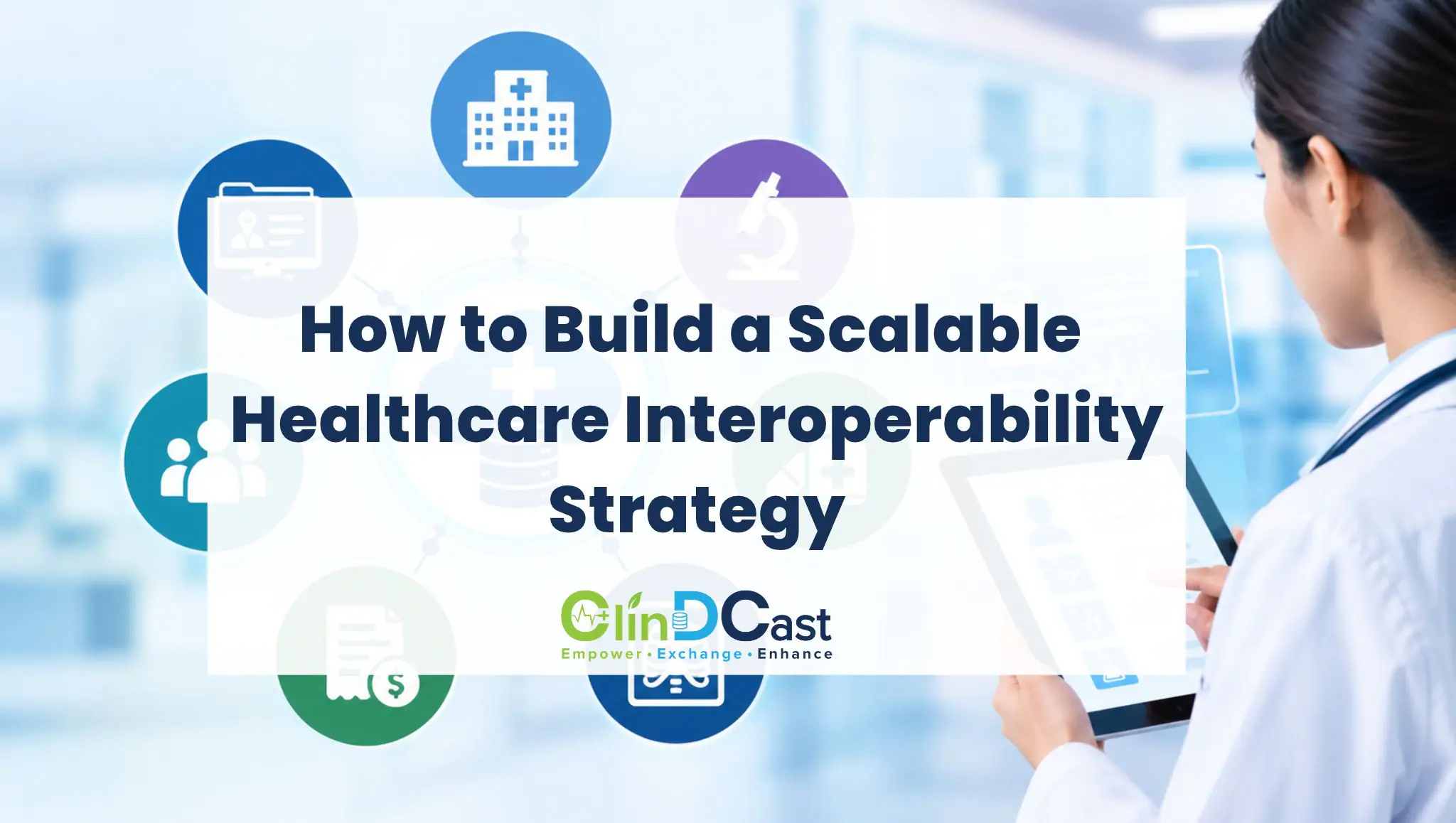









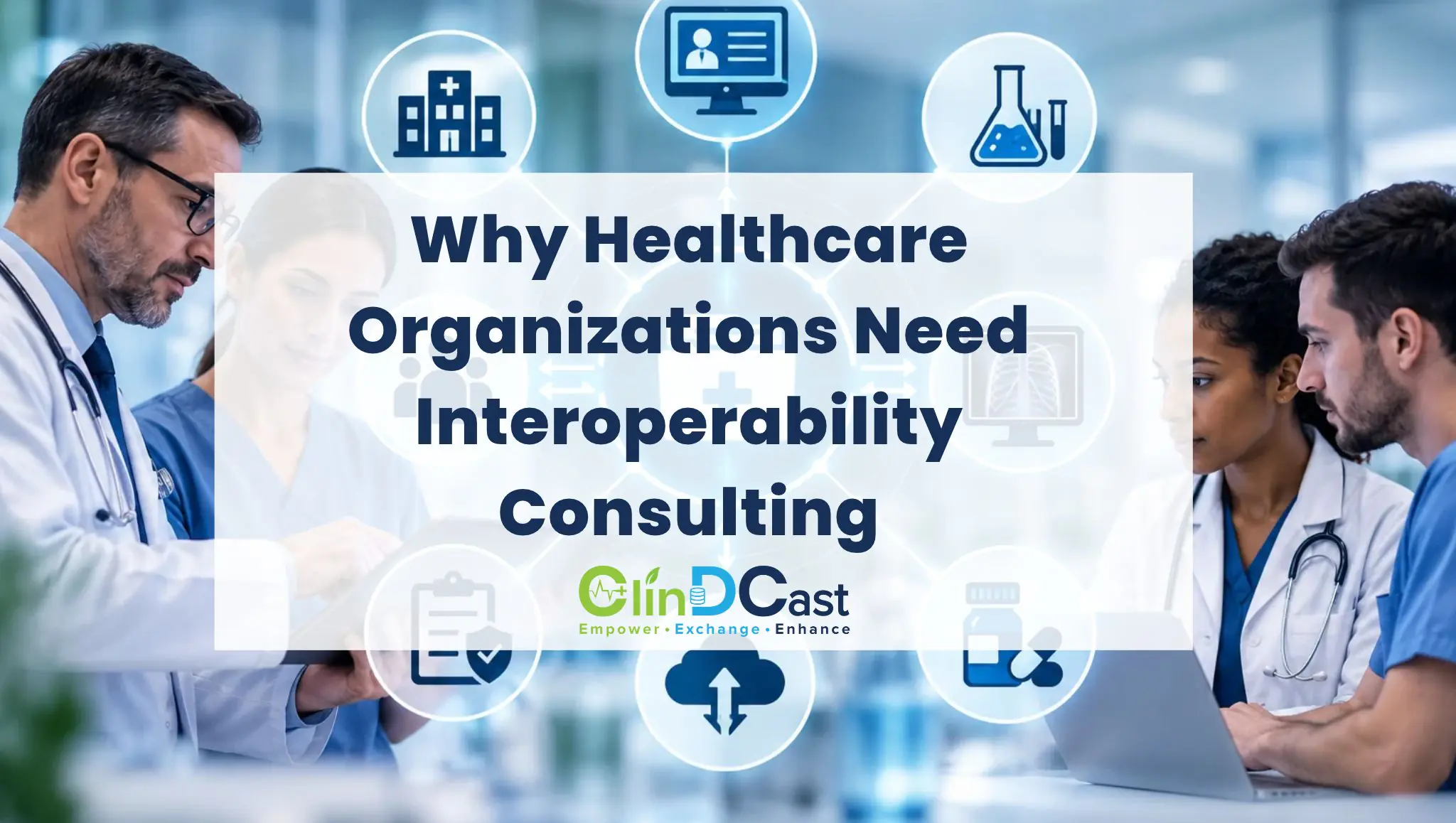
Healthcare organisations have a range of technology systems to manage patient data, clinical processes, lab results and more. If these systems are unable to communicate with each other, information is split into different areas which causes data silos, inefficiencies and difficulties accessing accurate patient information.
Understanding why healthcare organizations need interoperability consulting is essential for improving connectivity between healthcare systems, enabling secure data exchange, and streamlining clinical and administrative processes. With the right interoperability strategy, healthcare organizations can overcome integration challenges, optimize existing IT infrastructure, and build a more connected healthcare environment that supports better care coordination and operational efficiency.
What Is Healthcare Interoperability Consulting?
Healthcare interoperability consulting services are used to evaluate, design, implement and optimise healthcare IT systems. Interoperability consultants can help businesses integrate electronic health records (EHR), lab information systems, pharmacy systems, imaging systems and more.
Common standards used include Health Level Seven, Fast Healthcare Interoperability Resources and Clinical Document Architecture.
Interoperability consultants will analyse your current infrastructure, determine what needs to be integrated, recommend appropriate technology and create a strategy to ensure accurate, secure and efficient data sharing.
Why Healthcare Organizations Need Interoperability Consulting
1. Improve Healthcare Data Exchange
Healthcare will often have a variety of applications sourced from multiple vendors. The challenge here is that each application may use different data formats.
Interoperability consultancy services can help you identify the correct ways to integrate your applications. Consultants will be able to create interfaces, set up data mapping and resolve any compatibility issues.
This will reduce the reliance on manual data sharing and help ensure that authorised healthcare professionals have access to the right information.
2. Strengthen Care Coordination
Having access to accurate and relevant patient data is essential to ensuring effective care coordination. If medical history, prescriptions and lab results are not shared in an integrated system it can cause issues for staff.
Healthcare Interoperability consulting will ensure you have set up a consistent workflow for sharing data between departments.
Having better access to patient data can improve coordination of services, reduce gaps in information and enable informed decisions.
3. Reduce Manual Work and Operational Inefficiencies
Disjointed systems can mean data needs to be entered multiple times, manually moved between systems and reconciled. This can cause delays and potential errors.
Interoperability consultants will review processes and see where we can automate the movement of data.
For instance adding integration between an EHR and Lab Information system can help move orders/results electronically reducing duplication and allowing key staff to concentrate on what really matters.
4. Optimize EHR Integration
With EHRs being used to manage healthcare information, one element that can affect their success is their ability to integrate with other systems.
Using consultation services will help you to make your EHR platform work well with other systems including your lab system, pharmacy system, billing software, patient portal, and wider healthcare network.
This will allow consultants to evaluate how well your interfaces within your EHR are working, identifying any problems with integration and providing recommendations to improve.
With a well thought out strategy, often you can increase the value of your existing investment by extending it.
5. Support Healthcare Data Standards
Healthcare interoperability is achieved by enabling consistent data sharing between systems using standardised frameworks.
HL7 enables messaging and sharing clinical data between systems. FHIR is a contemporary framework for sharing health data using resources and APIs. CDA enables structured clinical documentation to be shared.
Consultants can provide guidance on what standards and approach should be used to meet organisations’ needs, configuration of interfaces, data verification and testing. This can ensure that appropriate standards are being used to create a more consistent integration process that meets any relevant technical and regulatory requirements.
6. Improve Data Quality and Consistency
Interoperability does not guarantee accurate transfer of information due to potential gaps in data such as differing patient identifiers, definitions, formats and mappings.
Interoperability consultancy will provide guidance on how best to set up your data so that there are rules around how the data maps to each other, validation processes and handling of errors.
This results in more accurate information being transferred between different systems. This means any discrepancies will be picked up and put in place before affecting any processes. Having consistent data helps with reporting, analysing and making informed decisions.
7. Strengthen Healthcare Data Security
Integrating healthcare applications can raise some key security considerations. You will need to ensure that you secure sensitive patient data.
Interoperability consultants can help you identify what steps you need to take to secure your authentication, authorisation, encryption, API and audit processes.
They can also review how information is shared between different information sources and advise on what security measures are needed. This ensures that you can manage the risks associated with integrating your applications.
8. Build Scalable Healthcare IT Infrastructure
Healthcare organisations often have new applications added, new services introduced and new technology partners to work with. Integration solutions can become complicated.
By working with a healthcare integration consultancy you will ensure you have a scalable integration architecture with the right interfaces, standard APIs and integration platforms in place.
This will make it easier to add new applications, maintain existing connections and also adjust your integrations to reflect any changes to your operations.
Common Healthcare Interoperability Challenges
Despite its benefits, interoperability can be complex. Healthcare organizations commonly face challenges such as:
- Legacy systems: Older applications may lack modern APIs or require specialized interfaces.
- Inconsistent data formats: Different systems may represent clinical information differently.
- Integration complexity: Multiple vendors and platforms can create dependencies and troubleshooting difficulties.
- Data quality issues: Duplicate, incomplete, or inconsistent records can affect information reliability.
- Security requirements: Data sharing must incorporate appropriate privacy and access controls.
- Limited internal resources: Healthcare IT teams may lack the time or specialized expertise to manage complex integration projects.
Interoperability consultants help organizations evaluate these challenges, prioritize requirements, and develop practical solutions suited to their existing infrastructure.
How to Implement a Successful Interoperability Strategy
A structured implementation approach helps organizations achieve reliable and sustainable integration.
- Assess existing systems: Evaluate EHR platforms, clinical applications, interfaces, and current data flows to identify integration gaps.
- Define priorities: Identify high-value use cases, such as laboratory result exchange, EHR integration, and clinical reporting.
- Select appropriate standards: Determine whether HL7 messaging, FHIR APIs, CDA documents, or other approaches fit each requirement.
- Implement and test integrations: Configure interfaces, establish data mappings, and validate information accuracy, security, and workflow performance.
- Monitor and optimize: Track interface failures, processing delays, and data quality issues to maintain reliable information exchange.
How ClinDCast Supports Healthcare Interoperability
ClinDCast provides solutions to help health care organizations overcome their technological challenges through a healthcare IT consultancy solution. ClinDCast can help your organization to become more interoperable by providing a range of integration services.
ClinDCast can provide the following to help you with your interoperability requirements:
- HL7 integration: Supporting healthcare messaging workflows and interface requirements.
- FHIR and API interoperability: Helping organizations implement standards-based approaches to healthcare data exchange.
- EHR integration: Supporting connectivity between EHR platforms and other clinical or administrative applications.
- Data conversion and migration: Helping organizations transfer and transform healthcare data during system upgrades or replacements.
- Integration optimization: Identifying data exchange issues and opportunities to improve interface reliability.
- Healthcare IT consulting: Aligning integration strategies with technical requirements, operational workflows, and long-term organizational goals.
By combining healthcare IT expertise with a structured integration approach, ClinDCast can help healthcare organizations work toward better system connectivity, more reliable data exchange, and improved operational efficiency.