








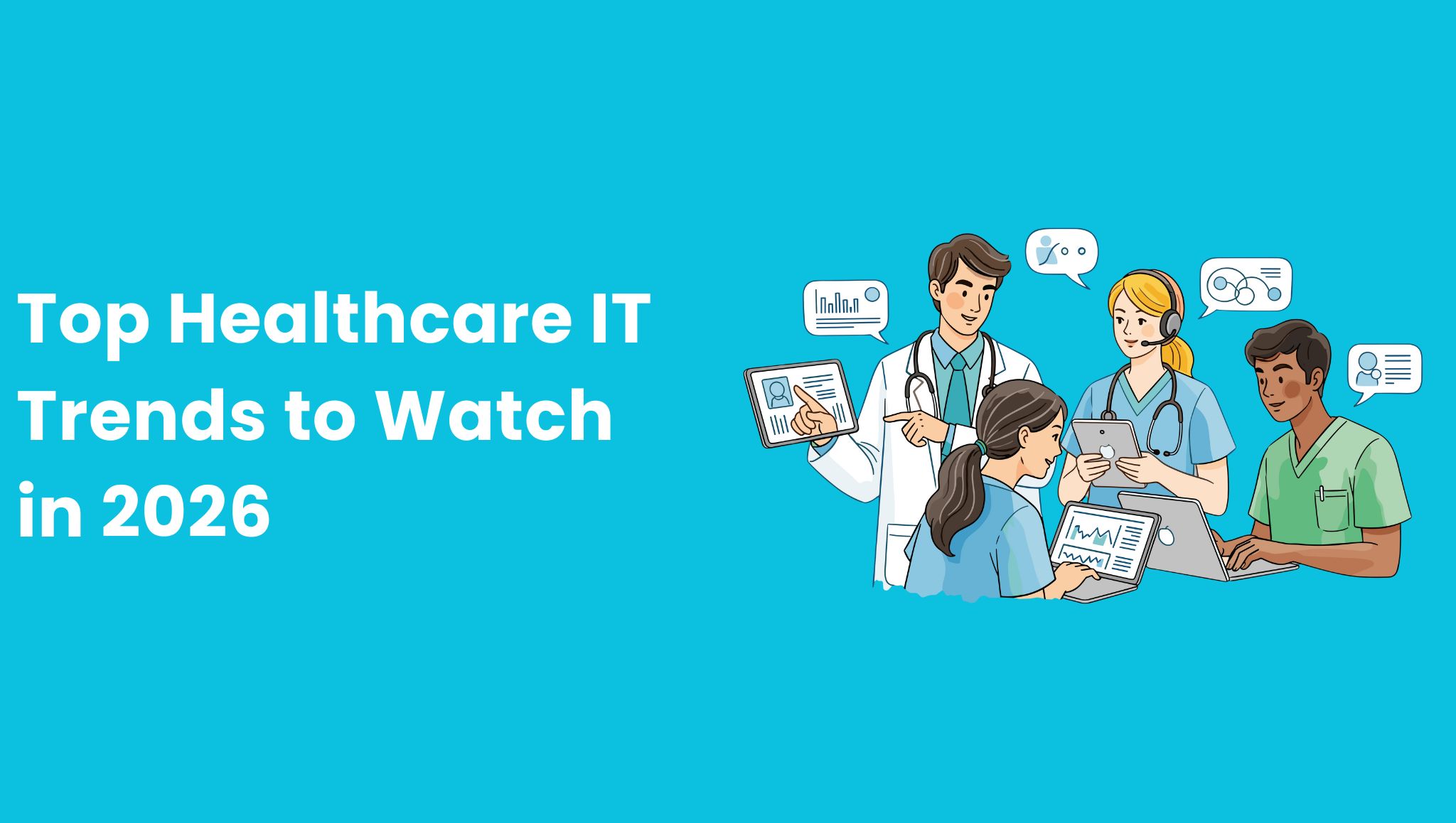
By 2026, healthcare IT will be centered around smarter technology, stronger security, and seamless connectivity and in this article we will explore Top Healthcare IT Trends to Watch in 2026. Hospitals and health systems are moving beyond basic digital tools and adopting intelligent platforms that actively support clinical decision-making, streamline daily operations, and enhance patient engagement.
As patient expectations grow and regulatory requirements become more complex—alongside ongoing workforce challenges—technology will continue to play a critical role in how healthcare is delivered, managed, and improved.
1. Artificial Intelligence in Everyday Healthcare Operations
Artificial intelligence will no longer be experimental—it will be embedded into routine clinical and administrative workflows. AI-powered tools will assist with clinical documentation, support diagnostic decisions, and automate revenue cycle tasks. At the same time, healthcare organizations will prioritize AI governance to ensure accuracy, transparency, and patient safety as these technologies scale.
2. Interoperability and FHIR-Based Data Exchange
Interoperability will evolve from a compliance requirement into a strategic priority. FHIR-based standards will enable faster, more reliable data sharing among providers, payers, and digital health platforms. Improved data exchange will enhance care coordination, reduce redundant data entry, and support advanced analytics and population health initiatives.
3. Cybersecurity with a Focus on Resilience
Cybersecurity efforts will shift toward resilience and rapid recovery. Healthcare organizations will strengthen zero-trust security models, protect connected medical devices, and develop comprehensive incident response plans. The goal will be to maintain continuity of care and protect patient safety, even in the face of cyber threats.
4. Ambient Computing and Clinician Experience
Ambient computing will transform clinical documentation. Voice-enabled tools and smart assistants will capture patient interactions and convert them into structured medical records in real time. By reducing administrative burden, these technologies will allow clinicians to spend more time focusing on patient care.
5. Remote Patient Monitoring and Hybrid Care Models
Remote patient monitoring will become a core component of chronic care management. Wearable devices and home-based sensors will continuously transmit patient data to care teams. Virtual and in-person services will blend into hybrid care models that improve access, enhance outcomes, and reduce hospital readmissions.
6. Regulation and Compliance in Digital Health
Regulatory oversight of AI, telehealth, and data privacy will increase in 2026. Healthcare organizations will need clear validation processes, audit trails, and strong compliance frameworks. Successful implementation of new technologies will require close collaboration among IT, clinical, and legal teams.
7. Cloud-First Healthcare IT Architecture
Healthcare providers will continue shifting toward cloud-first and modular IT architectures. Cloud platforms offer scalability, faster deployment, and improved disaster recovery capabilities. Hybrid environments that combine on-premise systems with cloud services will remain common across the industry.
8. Workforce Transformation and Skill Development
As technology advances, new skill sets will be essential—particularly in data analytics, AI operations, and cybersecurity. Healthcare organizations will invest in training and reskilling initiatives to prepare their workforce. Flexible staffing models and strategic partnerships will help address talent shortages and support digital transformation efforts.
9. Automation in Revenue Cycle Management
Automation will play a growing role in revenue cycle management, handling tasks such as coding, billing, and claims processing. These tools will improve accuracy and significantly reduce administrative workload. The result will be faster reimbursements and stronger overall financial performance.
10. Patient-Centered Digital Experience
Healthcare IT strategies will increasingly focus on delivering a seamless digital experience for patients. Online scheduling, virtual communication, and easy access to medical records will become standard expectations. Personalized engagement and transparent data practices will help build trust and improve patient satisfaction.
Conclusion
Healthcare IT trends in 2026 reflect a clear shift toward intelligent, connected, and resilient systems. Artificial intelligence, interoperability, cybersecurity, and enhanced digital patient experiences will shape how healthcare organizations operate and compete.
Long-term success will depend not just on adopting new technologies, but on aligning them with strong governance, regulatory compliance, and workforce readiness. Organizations that plan strategically today will be well positioned to improve patient outcomes, strengthen operations, and thrive in an increasingly digital healthcare landscape.